
What is the best type of solar inverter?
There are 5 types of inverters, and by the end of this video and post, you will know what they are, their benefits and their drawbacks so that you can confidently decide which is best for your solar PV system.
The 5 types of inverters are String inverters, Micro inverters, Power optimised inverters and Hybrid inverters. These all do the same thing of converting DC power to AC, but it’s not what they have in common that we care about; it’s the differences. So, let’s take a look at each one to get a better understanding of what they do.
String Inverters
What is a string inverter and how does it work?
String inverters are the simplest form of inverters. These are the ‘standard’ inverters that have been used in most domestic and small-scale commercial installations in the UK over the last 20 years and are often the cheapest option.
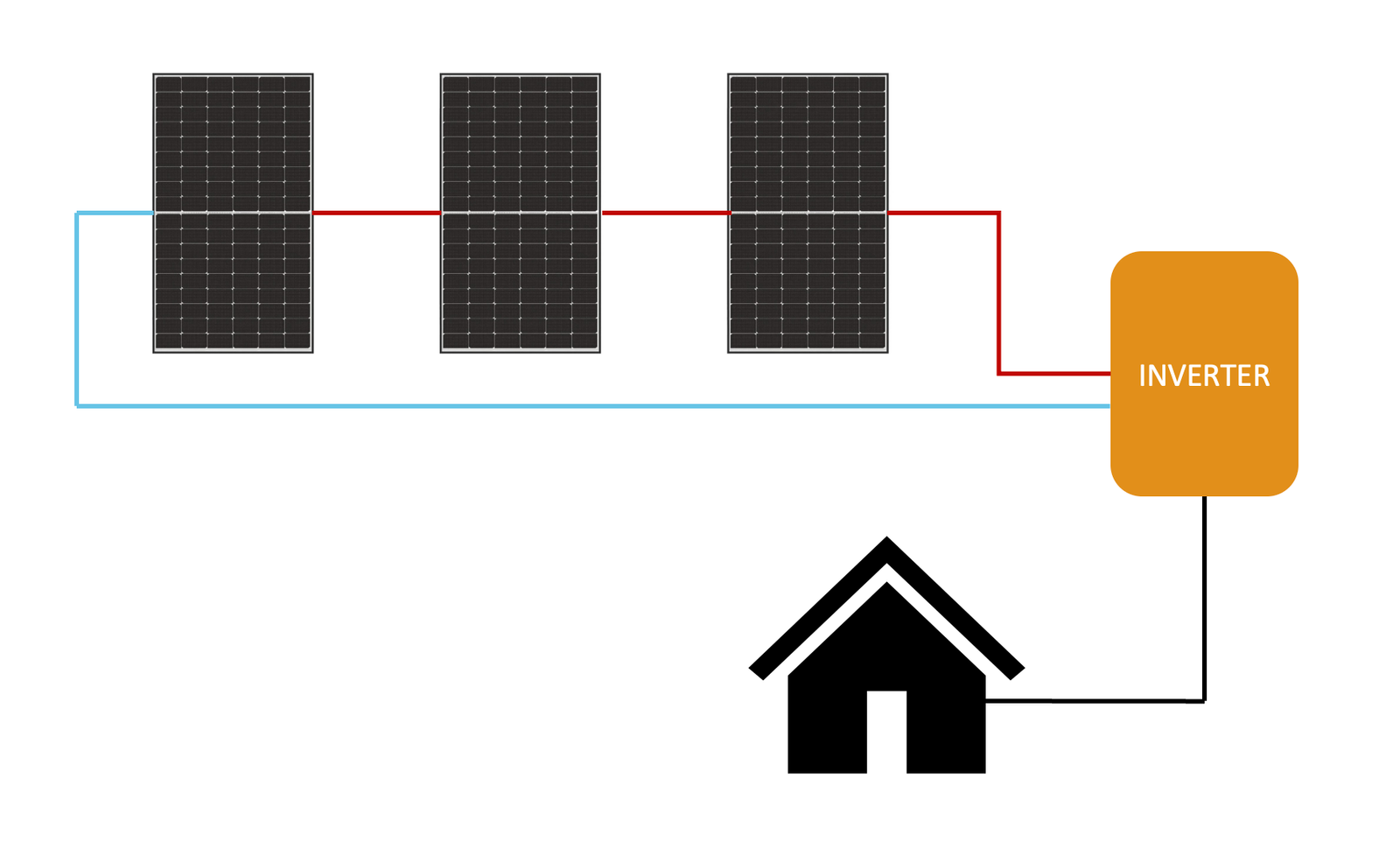
Diagram of basic string inverter system with a single string consisting of 3 panels.
For these, we connect solar panels in series, forming what we call a string. These strings of solar panels are then connected to their own or sometimes the same MPPT, which finds the optimum voltage and current to maximise the combined power output of the panels. These inverters are the most common because of their cheap price point. They are great if you want solar panels on 1 or 2 roof orientations with little or no shade, as their limited number of MPPTs won’t affect total production. The major downside of string inverters is that if one panel in a string fails or gets damaged, causing its production to drop, it will bring down the rest of the panels it is strung with.
Micro Inverters
What are the benefits of Microinverters?
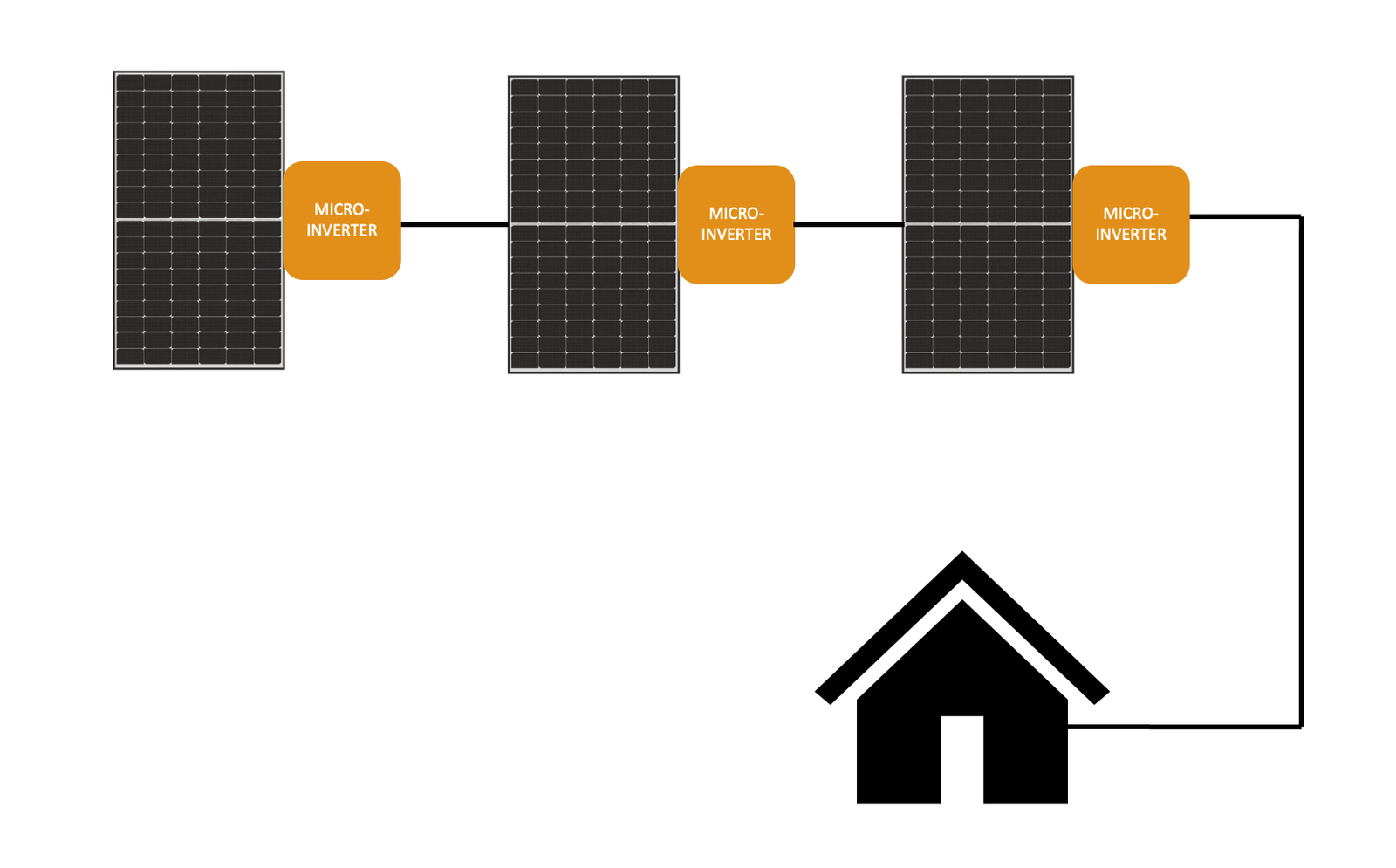
Diagram of a micro-inverter system with a single string consisting of 3 panels.
These smaller inverters are mounted on the back of each solar panel, maximising the power output of each one. By finding the Maximum Power Point (MPP) of each panel rather than each string, micro-inverters can increase the system’s production by 5-30%. Additionally, with AC power being safer than DC, micro-inverters also have the benefit of preventing any DC cabling from entering your home by inverting the power to AC while still on the roof. Finally, since micro-inverters connect the solar panels in parallel, they protect the string from complete failure in the event of a single panel failing. These extra features and additional production efficiency come with a premium price tag, increasing your initial investment, but you do get a 25-year warranty on these inverters, reducing your lifetime cost when compared to a typical inverter’s 10–12-year warranty.
Micro inverters come into their own on complex roof layouts where panels are at different orientations and inclinations or when there is shading. This is because they overcome the power loss you would typically see when there are a variety of current outputs on a single string. The most popular micro-inverters on the market are made by Enphase.
Power-Optimised Inverters
When are optimisers a good idea?
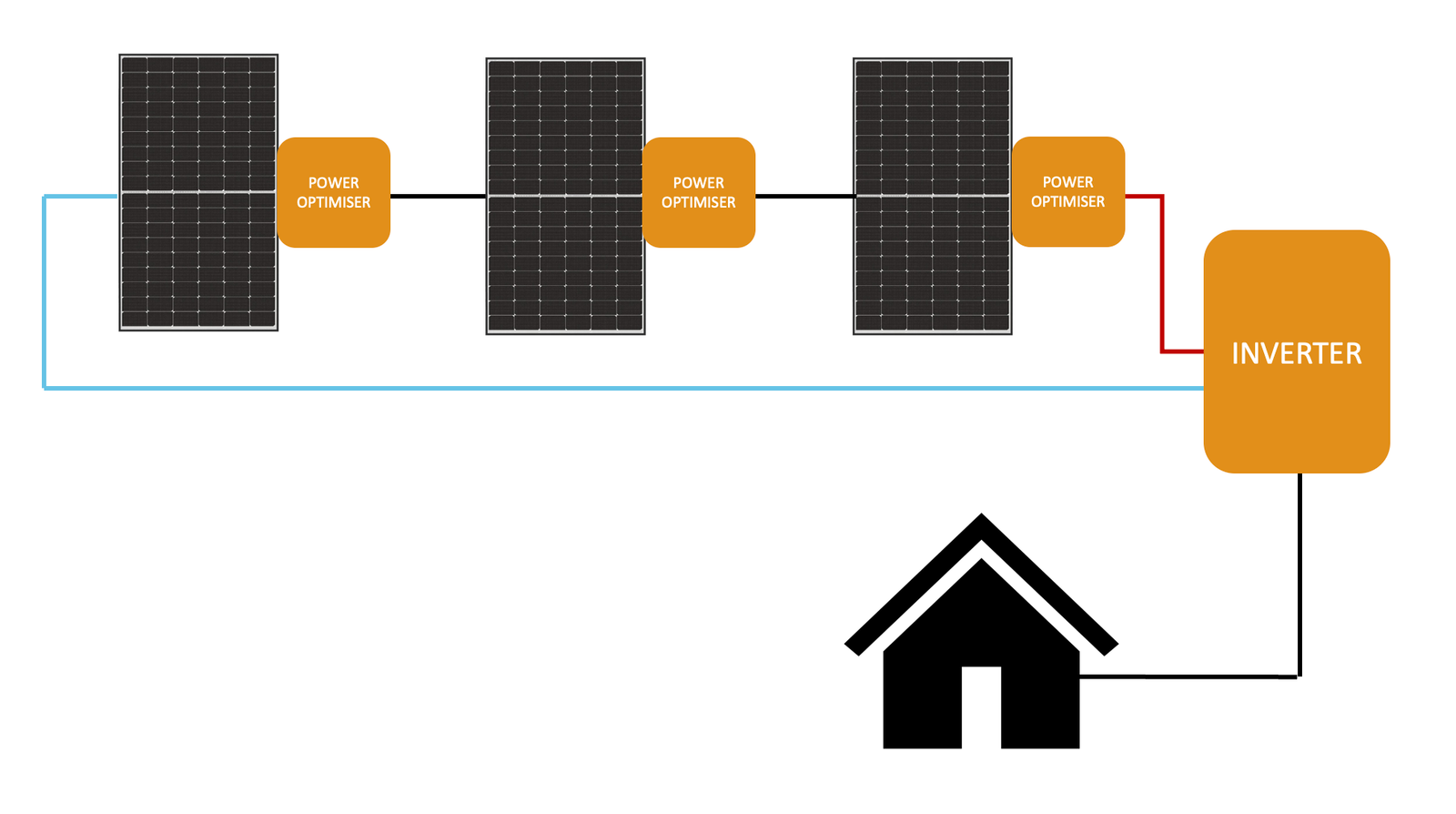
Diagram of optimiser system with a single string consisting of 3 panels.
Optimisers enable panel-level power optimisation without having the inverter behind the panel in a hard-to-reach location. These can be seen as an add-on to your system rather than as a whole new system type. These systems cost more than simple string inverters but less than micro-inverter systems. While they do give you the same bypass capabilities as micro-inverters, they don’t minimise the DC cabling or remove the single point of failure that you have with a central string inverter. Optimisers can mitigate all types of module mismatch-loss, from manufacturing tolerance to partial shading and ageing, while offering real-time performance tracking, so they are a great option when you are dealing with a shaded roof.
SolarEdge is the company best known for optimiser systems. Their systems promise increased output, 25-year warranties, panel-level monitoring and advanced safety features.
Hybrid Inverters
Why are hybrid inverters the best option for most people?
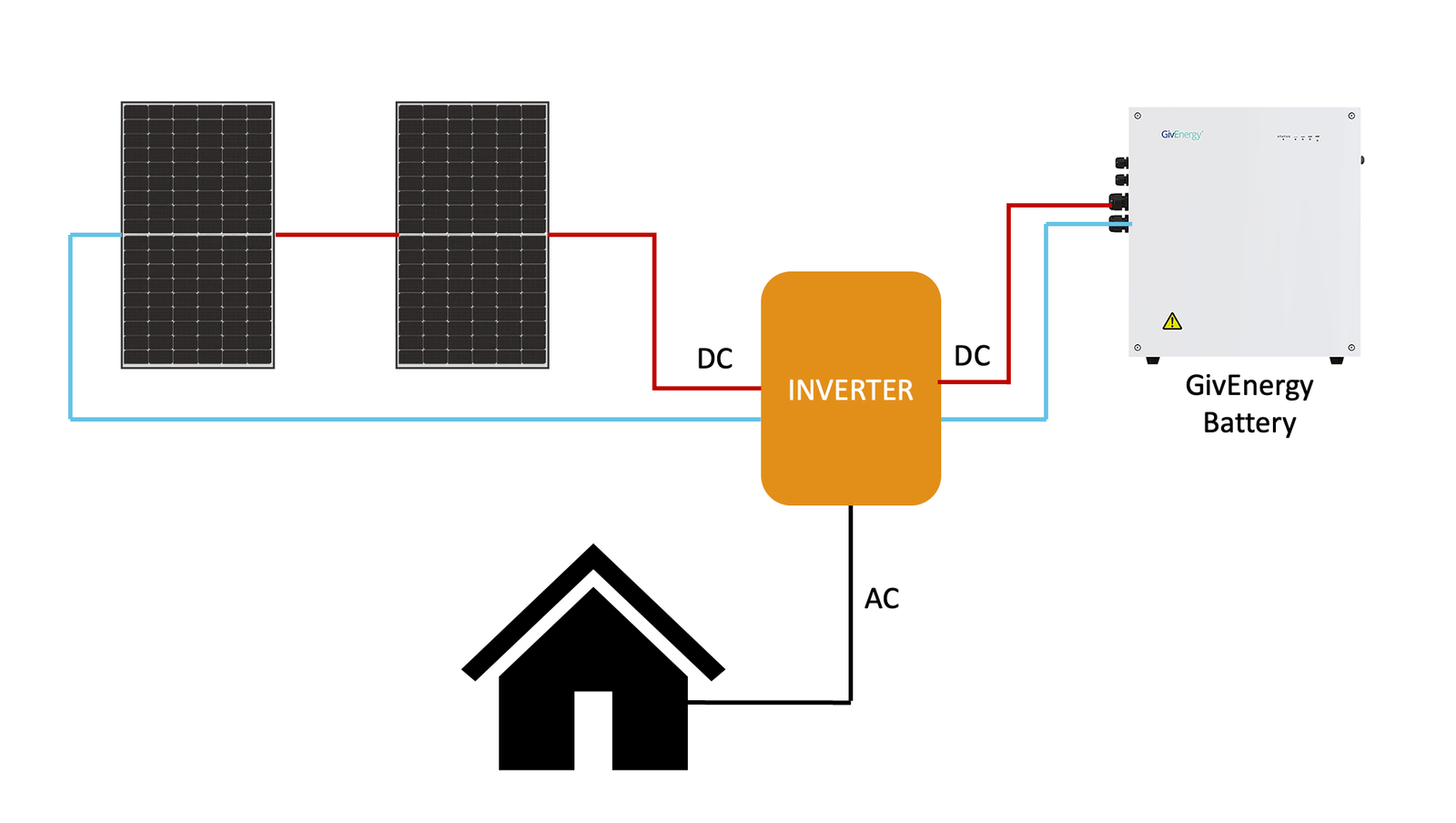
Diagram of hybrid inverter system with a single string consisting of 2 panels.
Hybrid inverters are the most efficient way to add battery storage to your solar PV system. They allow your battery to connect directly to your solar panels, enabling DC power from the panels to be stored directly in your battery, saving you the losses that occur when going from DC to AC and then back to DC to be stored in a battery. This feature is why hybrid inverters often allow for much higher DC oversizing. More recently, we have seen All-in-one systems being released, like the Tesla Powerwall 3. These are simply hybrid inverters that incorporate the inverter and battery in a single unit, simplifying installation and providing a cleaner setup. The only downside of having your solar panels and battery connected to a single inverter is that you could face output limits where your battery is full and the sun is shining, but your inverter can’t meet the peak loads that exceed its output rating.
AC-Coupled Inverter
What is an AC-coupled inverter for?
These inverters are simple inverters that allow you to add a battery to your solar PV system retrospectively. The need for an additional inverter to add battery storage often means a slightly higher overall cost; however, the main downside of these systems is the losses suffered by the additional AC/DC conversions required. However, if you are still benefiting from a Feed-in-Tariff or are interested in Micro-inverters, they are the best way to add storage to your system.
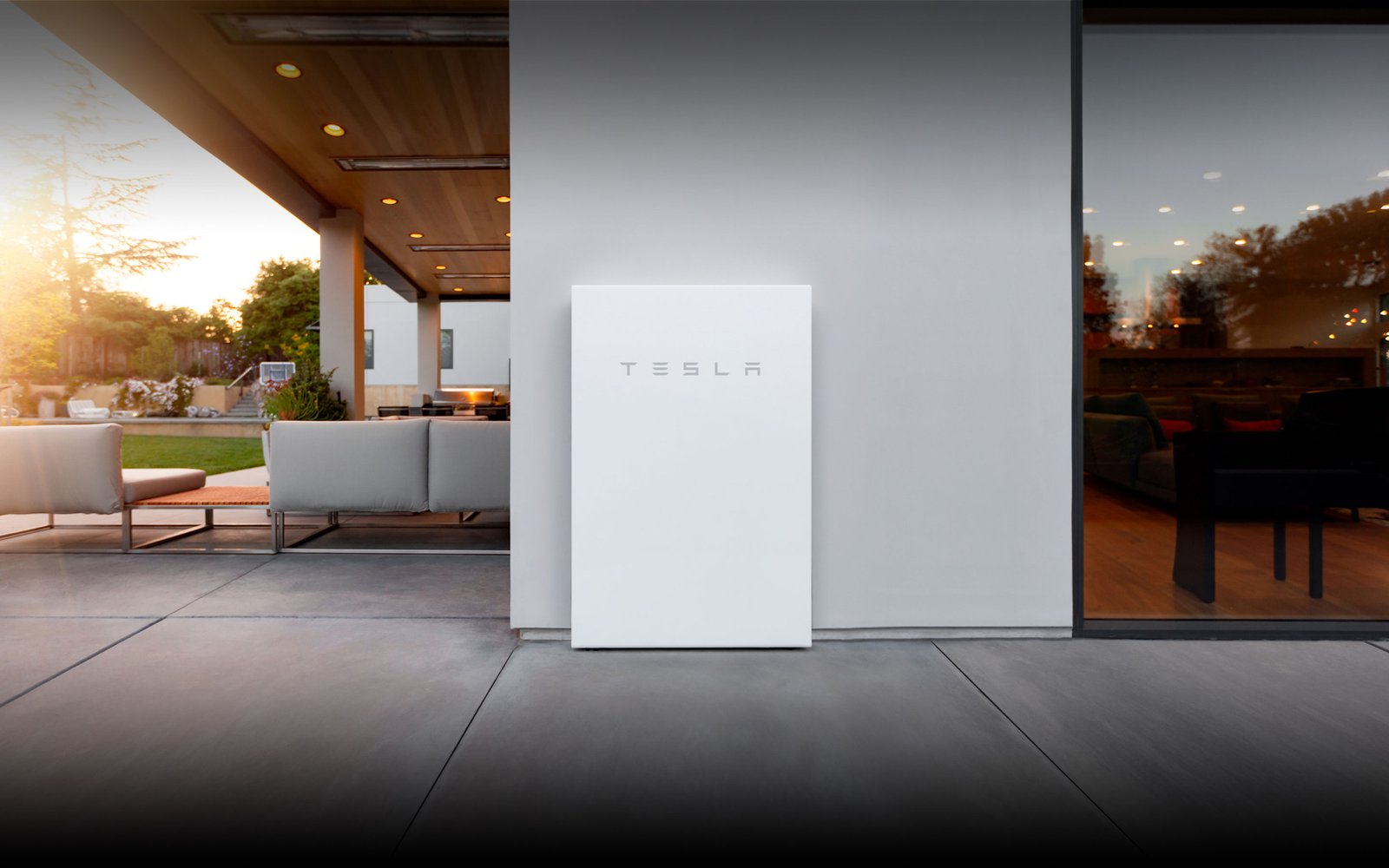
Tesla Powerwall 2 which is an AC-coupled battery solution.
Conclusion
Now that we know what different types of inverters are available to us and what their advantages and disadvantages are, we are in a better position to pick the right one for our unique needs and requirements. In another video, we cover what factors determine which inverter and system setup would be best for you; you can find that here.