
What is an inverter, and why it’s important to pick the right one?
When considering a solar panel system, picking the right inverter is one of the most important steps! You should see them as the heart of the system, the thing that makes everything else work. In the video and blog below, we will explain what an inverter is and why picking the right one that suits your unique needs is so important.
What is an inverter?
Firstly, we should cover the basics of what an inverter does. The main function of an inverter is to change DC electricity to AC or vice versa; it’s as simple as that. However, which inverter you choose will determine how efficiently it carries out this task when faced with your unique solar panel layout and set of circumstances.
To determine the best inverter for you, we need to consider your solar panel input, desired AC output, and the potential restrictions set in place. The capacity of any battery storage you have connected to the same inverter is also an important factor, but we talk about that in detail in another blog. In this post, we will be focusing exclusively on solar, so let’s take a closer look at each of these sections.
How does solar panel output affect your inverter choice?
Before we can talk about inverters, there is a key concept that we need to understand: Maximum Power Point Trackers, or MPPTs. This refers to how an inverter converts DC electricity to AC to maximise efficiency and output.
Key Concept: MPPTs
A Solar MPPT (Maximum Power Point Tracker) optimises the electricity from the solar panels connected to it by constantly finding the point where they produce maximum power. It adjusts voltage and current as sunlight, temperature, or shading changes, ensuring the system always runs efficiently.
Essentially, each solar panel generates electrical current based on the amount of light energy it receives at any given moment, which is influenced by various factors, including its angle, orientation, and shading. As this can vary for each solar panel on a roof, grouping them together before optimising their output could result in significant output being left on the table. Therefore, we must ensure that we group only those panels with similar conditions. Thus, if we aim for three orientations or angles of the panels, we need an inverter with at least three MPPTs.
This becomes more complex when we introduce shading, as it creates more varied outputs even for solar panels on the same roof, with the same angle and orientation, meaning that we need even more MPPTs to maximise output. We have dedicated videos that look at system production and system design, which explain solar panel output and how we design for it in more detail.
Another key thing to know is the maximum DC input an inverter can take. This typically increases with the inverter rating; however, some inverter types allow for significant DC oversizing, so one 5 kW inverter might allow for 7 kW of solar input while another might allow for 10 kW. We will explain why this is the case when we look at the different types of inverters.
What does the rating of your inverter affect?
The rating of your inverter determines its maximum AC output. So, a 5kW inverter can output a maximum of 5kW of AC power; adding more DC input to this will not change this. So, if we want higher output, we need an inverter with a higher rating. There are some caveats to this, as some inverters have a peak discharge that they can sustain for a short period (~10 seconds).
The basic premise is that if you want more AC output, then you will want a larger inverter. So, the question is, why might you want more AC output? Well, the higher your inverter output, the more of your peak demands you can cover with the green energy you are producing or have stored in your battery. The graph below was taken from the GivEnergy monitoring platform and shows the energy demand throughout the day of a home we installed a solar and battery system for. This household uses around 3500kWh of energy a year.
Graph showing the energy demand of an average UK home throughout the day.
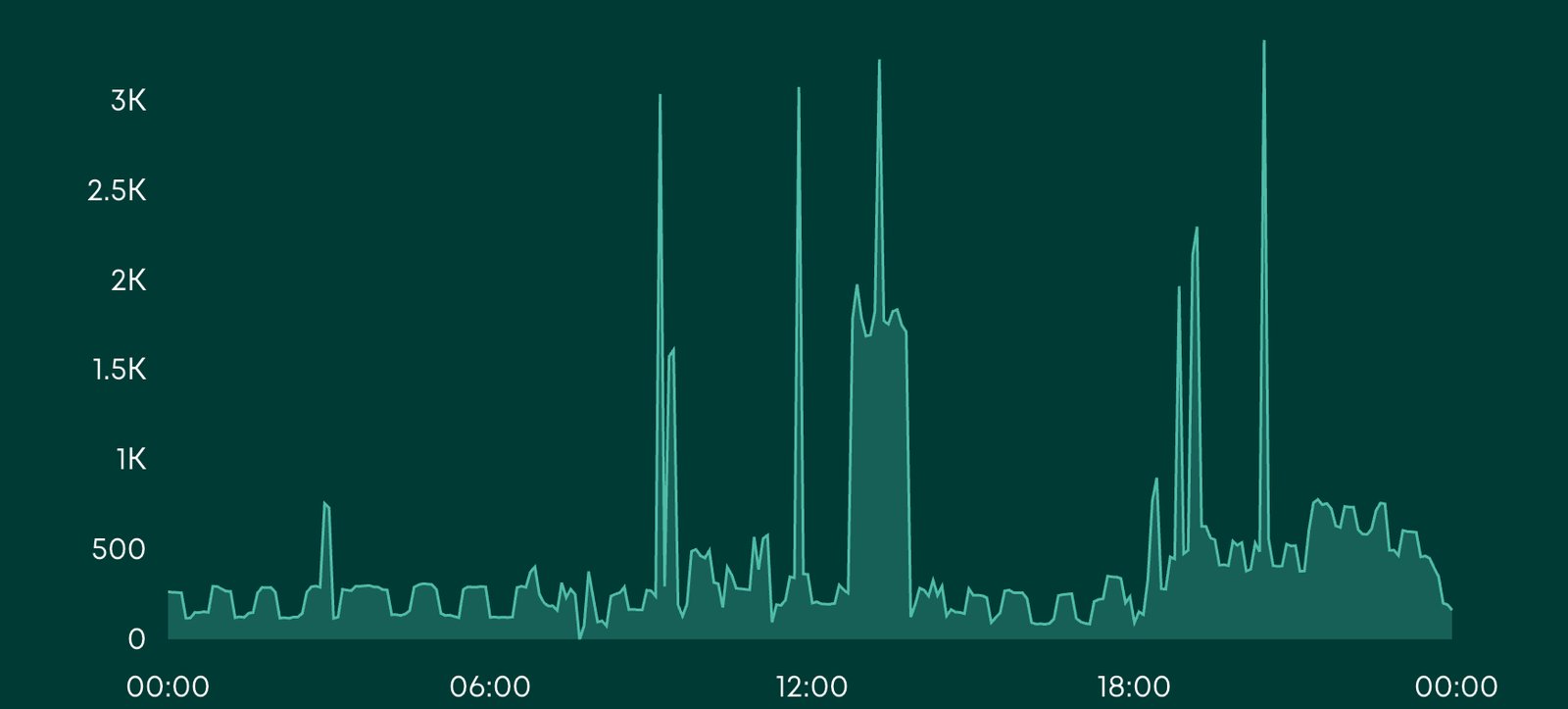
As you can see, although there is a steady power demand that doesn’t rise above 1kW, there are peaks that rise beyond 3kW. To ensure we can cover as much of our daily usage as possible, we need to look at these peaks and ensure that our inverter can over for them. Sometimes, like with this home, it is easy because the peaks aren’t that high, but I am sure you can imagine the difficulty when you are dealing with a home with higher peaks caused by pool pumps, ASHP, electric ovens, electric showers, etc…
What restrictions are there on inverter size?
So, if we want to make sure that we cover all our peak loads, why don’t we just get the biggest inverter available? Well, unfortunately, there are potential restrictions that we face. Your DNO (distribution network operator) can impose restrictions on your solar PV system, and depending on which one operates in your area, this can be a blanket restriction on the inverter output or a restriction on how much power can be exported to the grid. Your DNO wants to protect their electrical infrastructure, so they can’t permit us to just export whatever power we want. This is why we have a range of different DNO applications.
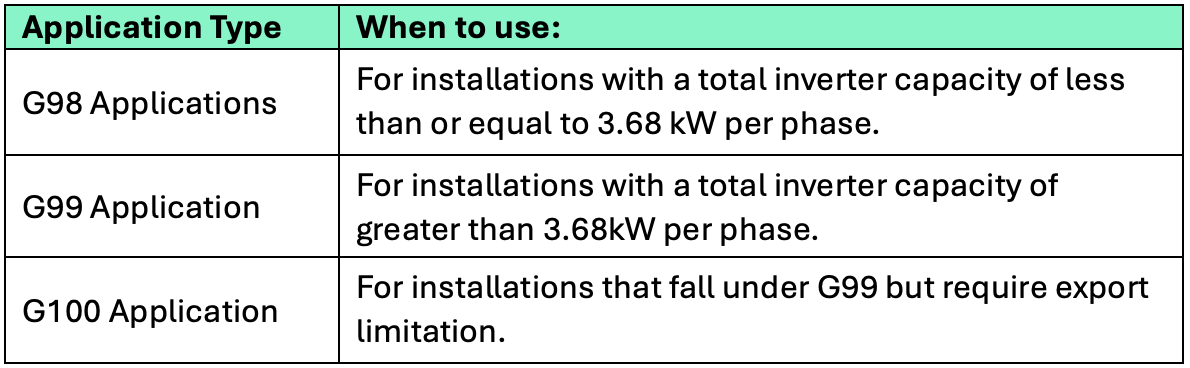
These restrictions are why it is important to choose a competent installer who can work with your DNO to ensure you have the minimum possible restrictions on your inverter capacity. There is additional work that is required for a G99 or G100 application, and they need to be completed prior to any installation taking place. This is why a lot of installers aim to stay away from these by only offering G98-compliant designs.
Why is it important to pick the right inverter?
As you can see, there are a lot of factors that determine which inverter will be best for you. The wrong inverter selection can result in a significant reduction in your solar production, or insufficient AC output or even get you in trouble with the DNO. If you would like more information on how to pick the right inverter, check out the video where we discuss just that.