
What is the point in Battery storage?
More and more homeowners and businesses are installing home batteries, but when a decent-sized battery costs thousands of pounds, it is important to know if the benefits truly outweigh the costs. Here, we will be looking at the 4 ways battery storage can save you £100s on your energy bills.
Why is everyone installing batteries?
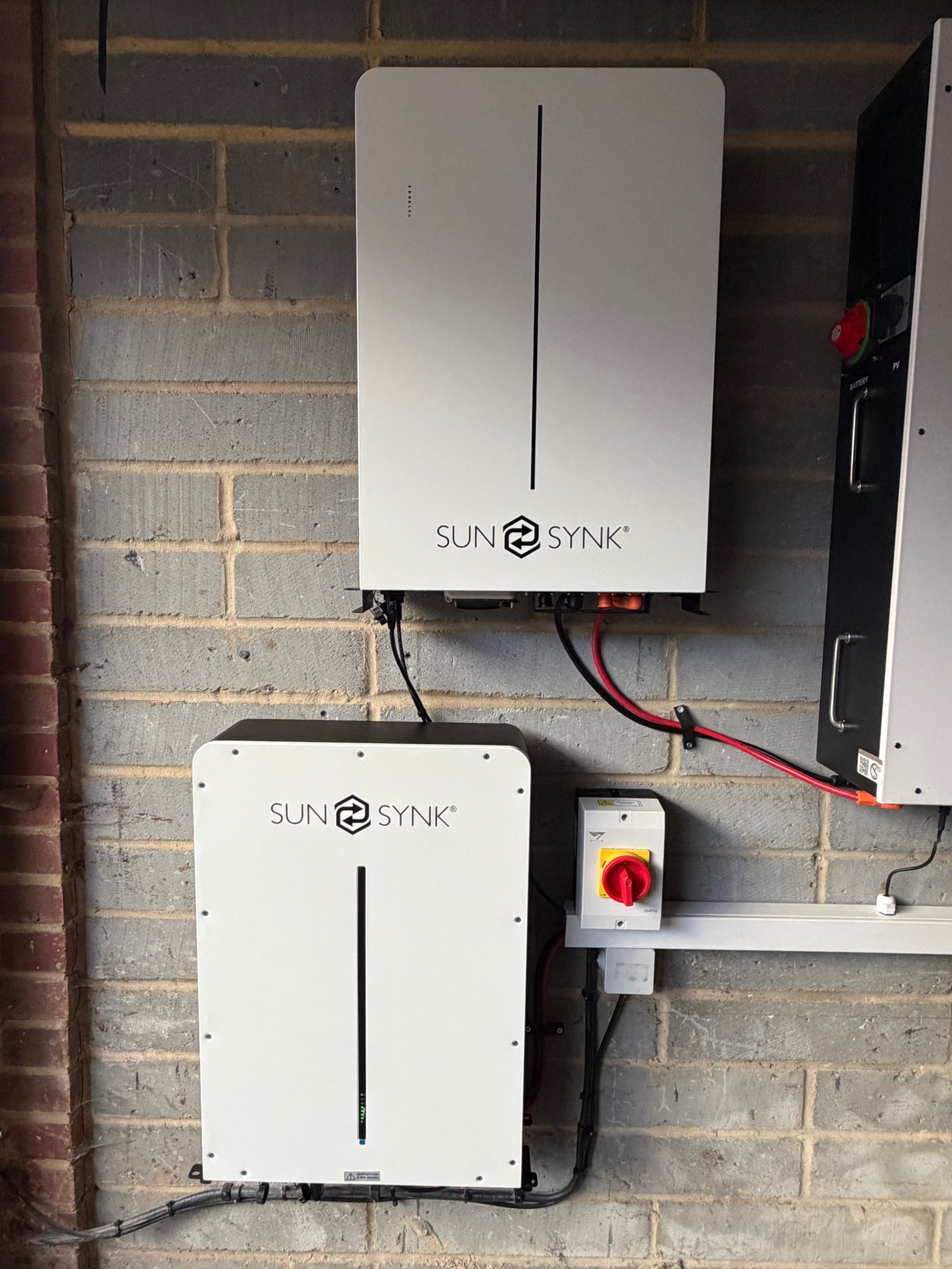
Batteries or Electrical Energy Storage Systems (EESS) are one of the best ways to increase the onsite consumption of your solar PV system; this has led to their increasing popularity in domestic installations over recent years. However, as we will discuss, their benefits aren’t just for homeowners with solar. Currently, the cost of a storage system in the UK ranges between £1,200 and £6,000, depending on capacity, battery chemistry, warranty and smart features. This is no small up-front cost; however, the investment can pay itself back quickly if implemented and set up correctly.
How battery storage can save you money
Increased Self-consumption:
The main benefit of battery storage is only seen when it’s installed with solar panels. A correctly sized storage system can increase your on-site use of solar generation from 15-25% to 65-80%. This is great as each kWh of free solar energy you use will save you around 28p on imported electricity compared to the 12p you can earn on the best SEG tariffs when exporting to the grid. They are especially effective for homeowners with a solar array who are not at home during peak sunlight hours (10 am-4 pm) as they can store the free energy produced by their solar PV system for use when they arrive home after work.
Buying Energy Off-peak
This is a great way to minimise the cost of energy you import and is worth considering, whether you have solar panels or not. By charging your battery from the grid during off-peak hours, you can take advantage of the significantly reduced electricity cost offered on many smart energy tariffs. This is great for solar panel owners, as during winter, due to the reduced solar production, their batteries won’t get much use. In these months, you can charge your battery up at a cheaper rate of 7-10p for use during the day. This is also a great option for those without solar, as they can do the same. This is often called load shifting, as you can shift your entire grid demand to when energy is cheapest. Below is a graph showing what this would look like:
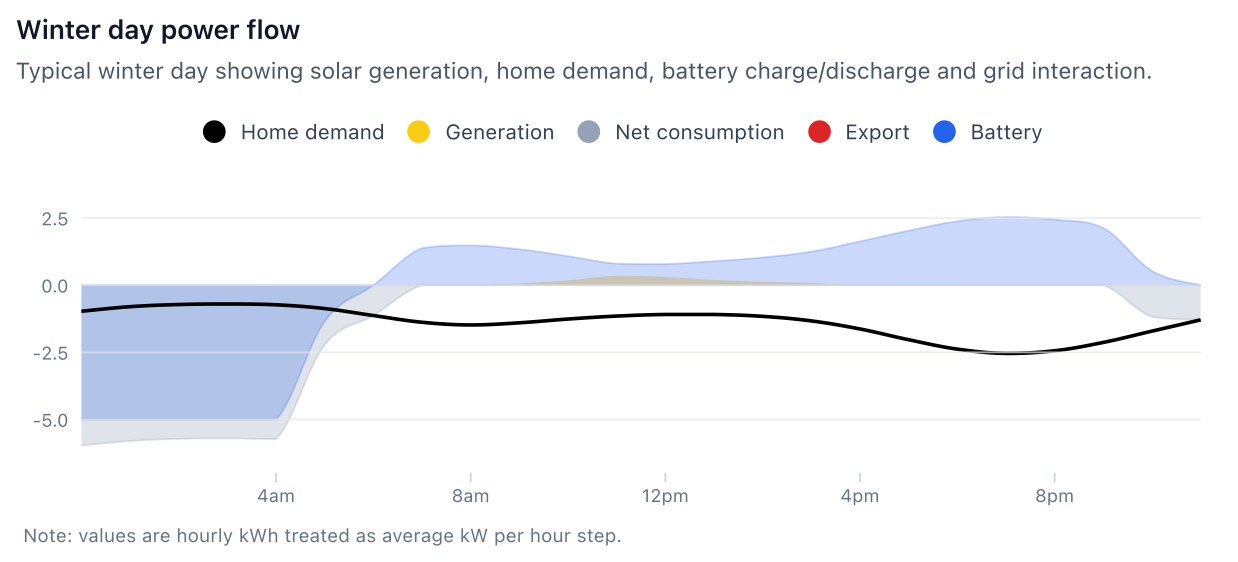
This daily power flow graph is for a Surrey home with very high annual usage (9500kWh), which is about 26 kWh a day. This home could only have a small solar PV system on an outbuilding, so it needed a large battery system to load-shift and maximise its savings.
Selling during Peak-time
This is worth considering for homeowners who have or plan on having a solar array with an output much higher than their daily energy needs. By buying a bigger battery than is needed to cover your evening loads, you can store additional solar energy to sell to the grid at an optimum time. This allows you to earn more for your solar energy than you would by exporting it as soon as it’s produced.
The extra capacity of your battery is simply there to act as a time delay on your export, allowing you to maximise your earnings. We can all agree that earning 30p/kwh is way better than earning 12p/kwh.
Energy Trading
Finally, we have energy trading. This combines our last two points by buying energy cheaply during off-peak hours and selling it back to the grid during peak hours for a much-increased price. Again, this is something worth considering if you have more battery storage than you need to cover your household demand.
Conclusion:
As you can see, there are a lot of ways battery storage can save, or earn, you money. You should now have a much clearer understanding of why battery storage is well worth considering! Whether you have solar, are thinking about installing solar or even if you don’t want solar panels at all, battery storage is a great pathway to savings.
Click here if you are interested in learning more about battery storage for your home or business!