
QE Park Centre in Guildford
Take a look at the commercial solar PV and battery installation we completed for the QE Park Centre in Guildford.
This Solar PV and battery system was funded by Your Fund Surrey and will allow the Church and Community Centre to continue serving its local community. This system aimed to reduce the energy bills of the building as much as possible, and this system will help them save over £8000 a year!
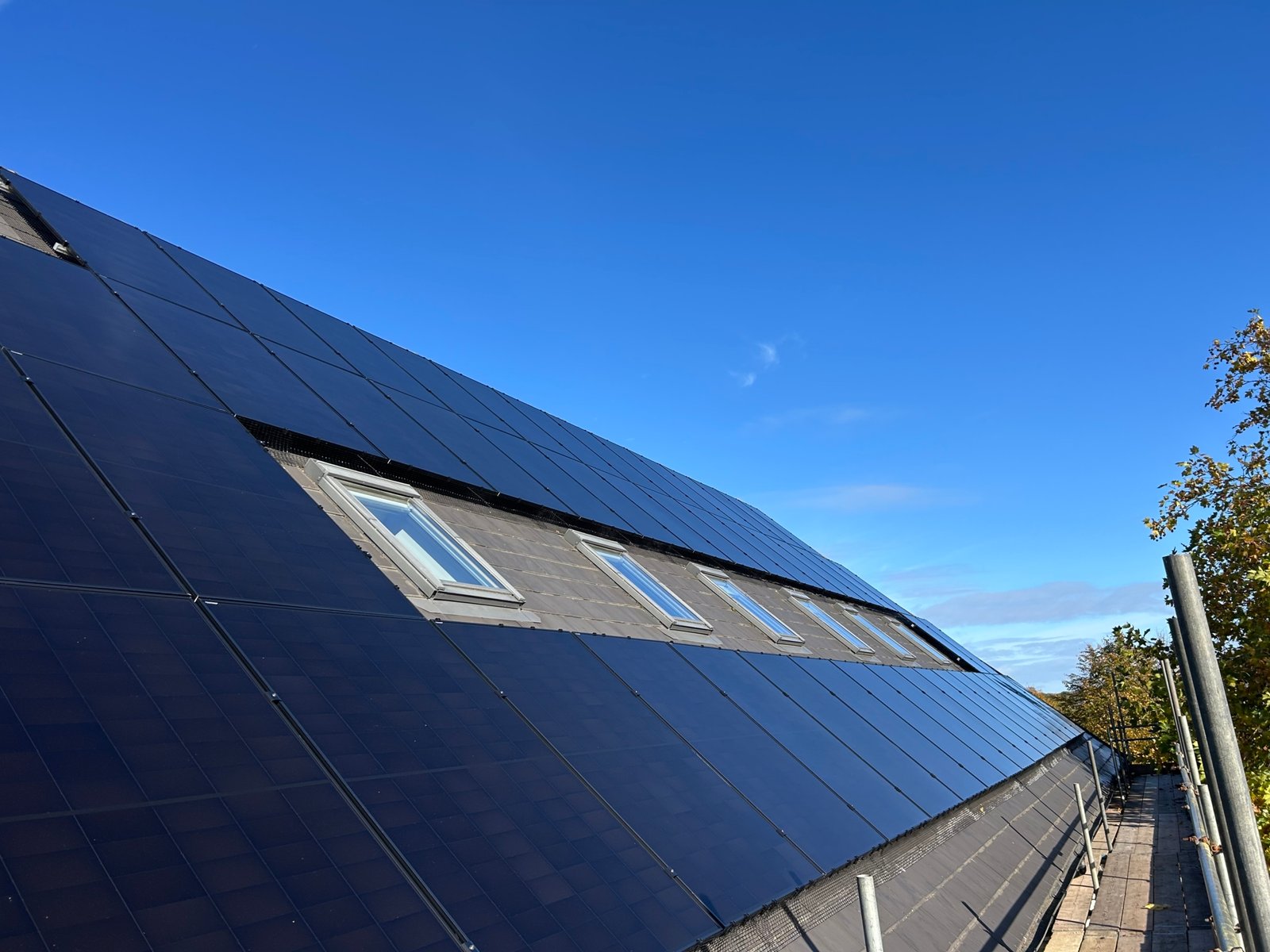
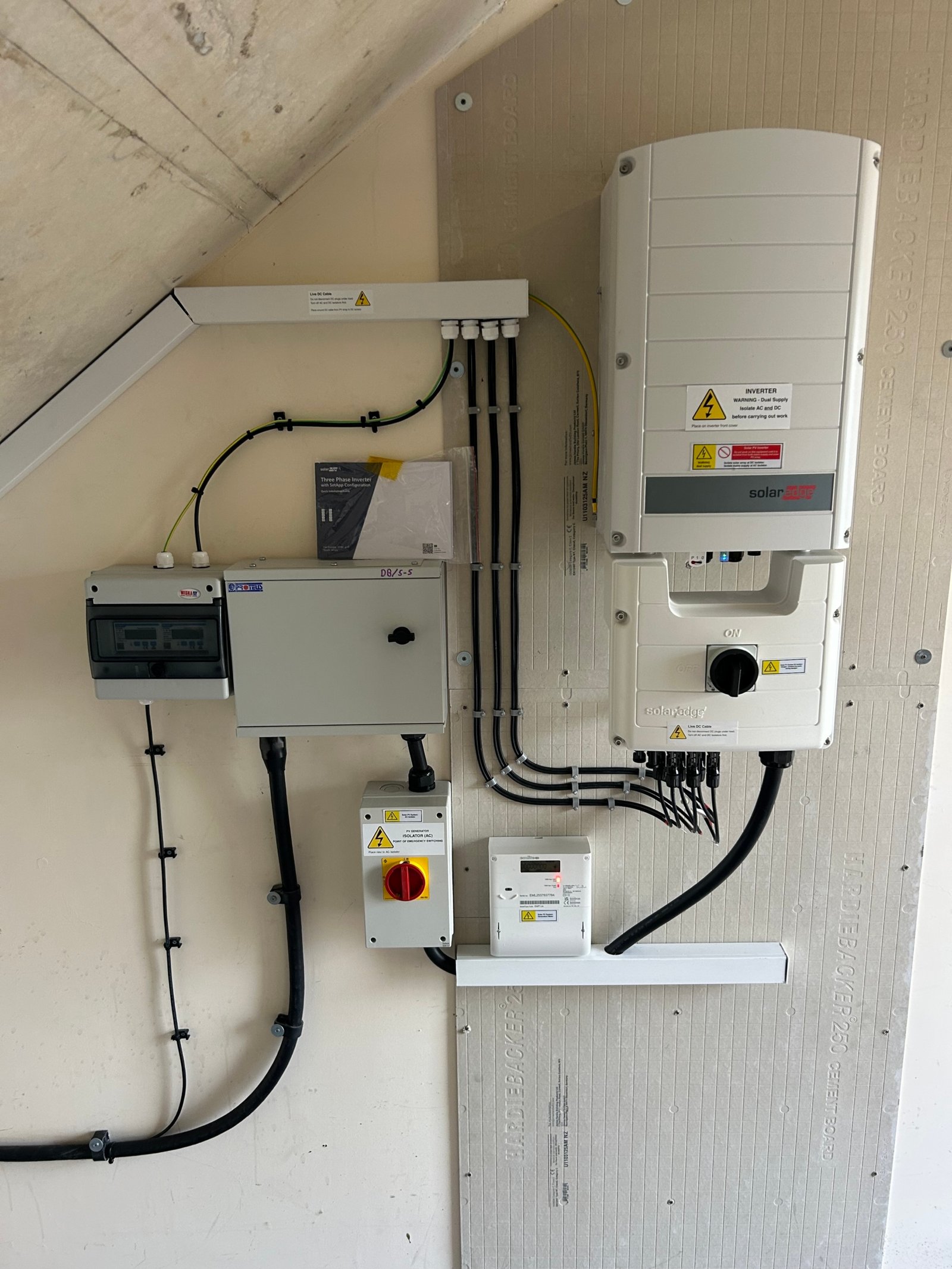
Their Solar PV and Battery System
This is an overview of the Solar PV system we installed for this Church in Guildford.
We installed 63 x 465W Aiko Neostar 2S Solar panels, 51 of which were on the main South East-facing roof. Since this roof deals with shade, we installed SolarEdge optimisers under each panel.
This 29.3 kWp system is estimated to produce 22’978 kWh annually through its SE30K SolarEdge 3-Phase inverter, for which we extended the warranty to 20 years. It is typical to undersize your inverter; however, in this case, we needed the higher input current offered by the SE30K model.
This is paired with a FoxESS AC3 10kW inverter with 32.6kWh of battery storage, which will mainly be used during winter to take advantage of cheaper off-peak rates.
A Detailed Look at their System
This system was at a fixed budget due to the funding, so our mission was to maximise the system’s lifetime savings while staying on budget. This might sound simple, but when there are so many variables to consider (panel output, panel warranty, battery capacity, inverter specification, inverter warranty, etc, etc), it becomes a delicate balancing act.
Maximising Solar Production
Dealing with Shade
The main challenge with this project was that the main South-East facing roof suffers from partial shading from a large oak tree. This left us with a few options: avoid this roof entirely, avoid the shaded section of the roof, string the panels affected by shade separately, or use optimisers/micro-inverters. Since we only had minimal south-facing roof space, we couldn’t avoid this roof entirely or the shaded section if we wanted decent annual system production. This left us with smart stringing or smart technologies.
Typically, it is more cost-effective to just string the partially shaded panels together so that their reduced output has minimal to no effect on the unshaded panels. However, in this case, the additional benefits provided by a SolarEdge optimiser system lead to it being chosen as the shade mitigation option.
Battery Storage to maximise savings
Due to the very high energy usage of this commercial building, the majority of the solar production will be used directly as soon as it is produced, meaning that the battery will get minimal usage. So why did we still install a battery?
The benefits of battery storage extend well beyond just maximising solar self-consumption. In this case, the majority of the benefit from battery storage will be seen during winter, where it will be used to aid in “load-shifting”. This is where you shift your energy usage to when electricity import is cheapest by charging your battery during these hours and using the stored energy for use throughout the day when energy is more expensive. You can read more about the various benefits of battery storage and how to take advantage of them in our blog linked here.